
Active adult communities are rapidly reshaping expectations for retirement living, but delivering them successfully requires a fundamentally different development mindset. Development in senior living is inherently complex, and as a specialized development and construction team, Avenue has built tailored processes to navigate those challenges and produce communities that perform, both financially and socially. To better understand how that philosophy translates into real-world outcomes, we sat down with Avenue Founding Managing Member Laurie Schultz for a focused conversation on what today’s active adults truly want.

Q: From your experience, what are today’s active adults actually asking for? That wasn’t prioritized 10 to 15 years ago?
We’re considering that active adult is really today’s boomer generation, and in general, our senior housing industry is not ready for the boomer generation. We have not customized, we’ve not created curated experiences. We’ve really created a cookie-cutter approach to the old school hospitality model. And today’s boomer wants something different. They don’t want to move into what traditional senior living is.
And so we’re still doing an education process nationally on what an active adult is. And I like to call it boomer housing. It’s the answer to keeping aging Americans healthier, longer, in the comfort of their home, by creating a unique community and a sense of purpose for them. And that can be everything from programming to just the socialization aspects in the community.
To have opportunities to volunteer in the community. Some residents are still working. And so creating a lifestyle environment and programming around that, that fits the time of day, with their lifestyle.
Today’s active adult is really answering what today’s boomer generation and future generations of aging Americans want. And that is a sense of community, a sense of belonging, a sense of purpose, and above all, a way to live healthier, longer, and prevent the need from ever moving into traditional senior living.
Q: How does community design influence independence and lifestyle satisfaction?
The way Avenue designs active adult communities is very different than an approach we would take in a traditional senior living community. Flexibility is key. Having multi-purpose areas, community spaces that can change with the time of day or resident activities, is very important. Gone are the days when we are designing a specific movie theater or one use for a space.
We have active spaces that are engaged with residents and can be used throughout the day for different purposes. For example, in our Viva Bene St. Peter’s community, we have an area that we call a coffee bar by day and a wine bar by night, and that is really like the hub and heart of the community room in our main space.
And that can change throughout the day. But the main goal and purpose remain the same, like 24-7. That is the heart and gathering space of the community. We also have club rooms that are used for activities for residents, for residents and friends who don’t live at the community, that can be used for prospect events at the smaller, intimate space that residents can truly like. Program around the uses and activities that they want.
Q: What’s one misconception developers still have about what this demographic values the most?
I talked to so many people in the industry about their interest in getting into active adult or other developers from multifamily or their asset classes that see this shiny object and say, I want to do that. And a lot of the questions are around the physicality of the building. How big should the units be? What would be a good unit mix for the building?
What are the price points like? What kind of rent premium are you getting in multifamily? And while those questions are clearly important for investors and underwriting a project to make sure that it pencils, the real secret of active adult and creating a lasting sense of community has nothing to do with the physical building. I was at Viva Bene St. Peter’s this week for our first birthday as a community, and it was the highlight of my month being able to talk to residents.
I talked to so many who were eager to tell me their stories of how they found Viva Bene and what they loved about living in the community. And out of the 20 or so people that I talked to, I only had one tell me how much she appreciated the aesthetics, the finishes that we had in her unit, and she was clearly very design-focused.
But for the rest of the residents, it was about the people that they had met. It was about the programming. It was about our preventive health services and how that’s opened their mind to a different way of living. It was about the community connections and the new interests that they were forming. So the most important thing, of course, is that this is a real estate investment. And it needs to make sense on paper to truly create lasting financial success for the property. You have to create socialization success for your residents.
Q: How does Viva Bene balance hospitality, wellness, and long-term livability?
At Viva Bene, we are taking the traditional socialization approaches to active adult. One step further. And that’s combining what most people would look at as a hospitality model. That word has been very popular in senior living and how we create this hospitality in active adult, but also brings a sense of purpose for our residents. So in Viva Bene, we have four pillars. And I think these are incredibly important for a variation of these pillars. In any active adult community, it gathers. That’s our first pillar that is the heart and soul of any active adult community.
Is that socialization, the gathering of residents, the creation of the sense of community? The second is attainable. And this is a topic that I don’t believe is widely received across the industry and widely touted across the country, of how vital active adult is for the boomer generation to be able to afford this sense of living
A traditional senior living model is incredibly expensive, and it should be because we are going from a hospitality model in senior living to a health care model, and that’s expensive. That is causing lots of stress on operating margins, etc., that active adult is taking this to an attainable price point for residents to hit a middle market, and middle market means lots of different things to lots of different people.
It’s incredibly wide range, but what it is is the majority of boomers in America today fit in this category, and active adult is answering that attainable price point, which will allow people to live in this cost setting longer, which is better for them, their families as they budget, and also for us as owners of these properties, that they’ll be able to stay in their homes, in our communities longer, to pay rent.
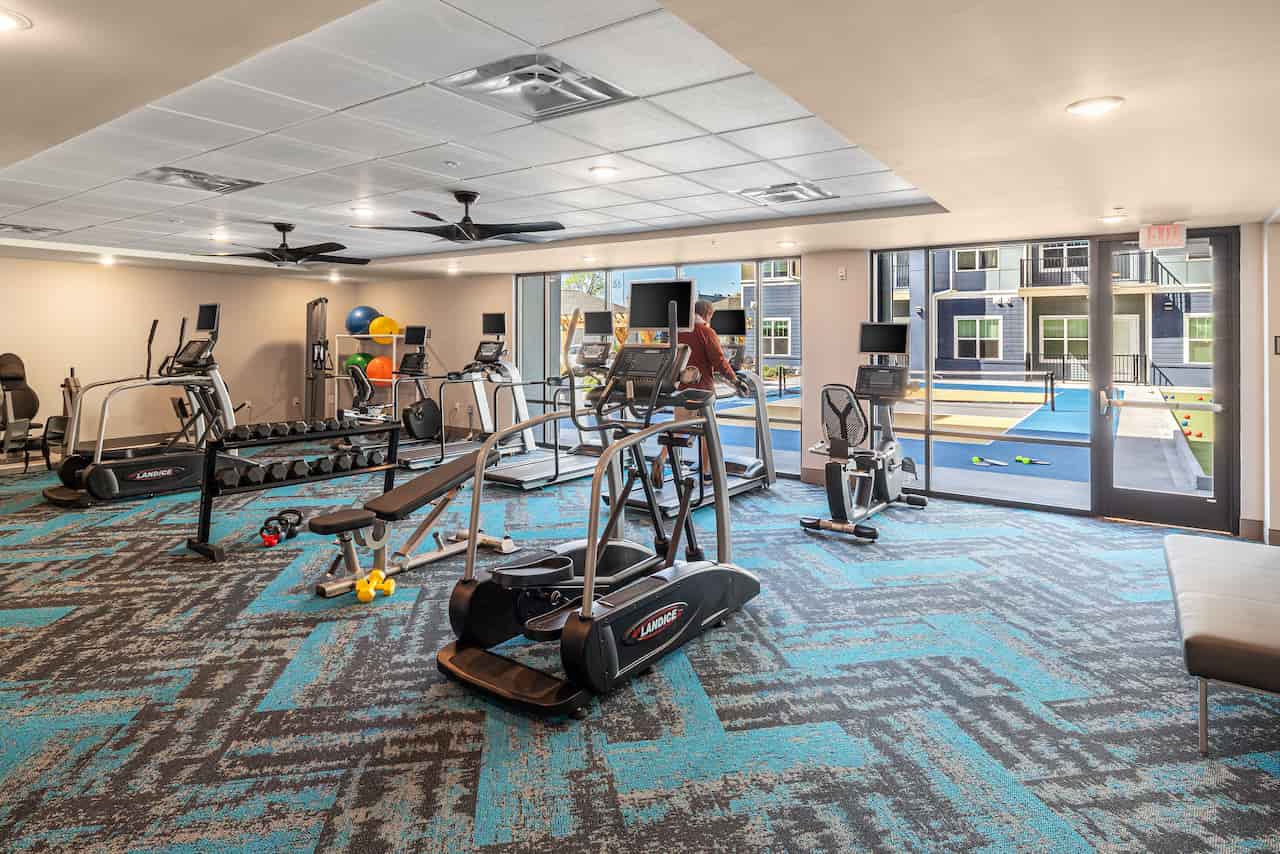
Our third pillar is our Propel Programming. This is the fitness classes, nutrition classes, healthy education seminars, and lifelong learning. We want our residents to be active in mind, body, and soul, and our programming is part of that. The fourth pillar is WellVB and this is really where you get longevity and that sense of long term commitment to your community that we’re most excited about in many different pilot programs that we’re doing with, WellVB it started with Sevi Health, which is our primary care partner, and today they’re operating a care coordination, Well Concierge model that is basically a personalized, well, concierge that works with residents through all of their health care needs and navigates an incredibly complex health care ecosystem for them and their adult children that may have questions about their parent’s health.
We’re also bringing on a new pilot, which started at the end of 2025, that we’re doing into 2026, that we’re very excited about with group health. This is an AI-powered strength and mobility virtual platform. That’s the first of its kind that will truly help residents connect some of their physical ailments and be able to work on mobility, which is incredibly important at any age.
And their strength and conditioning, which for women as we age and face concerns like osteoporosis, is incredibly important for the longevity of women’s health. And we’re excited to work on many new pilots this year and beyond to add to the, WellVB programming.
Conclusion
Active adult communities are no longer a niche concept; they are a necessary evolution in how the industry responds to the needs of today’s boomer generation and those who follow. As Laurie Schultz makes clear, success in this space is not driven by unit sizes, finishes, or amenity checklists alone. It is driven by the intentional creation of community: places that support social connection, purpose, wellness, and affordability in ways that allow residents to live healthier, more engaged lives for longer. Contact us today to learn more.