
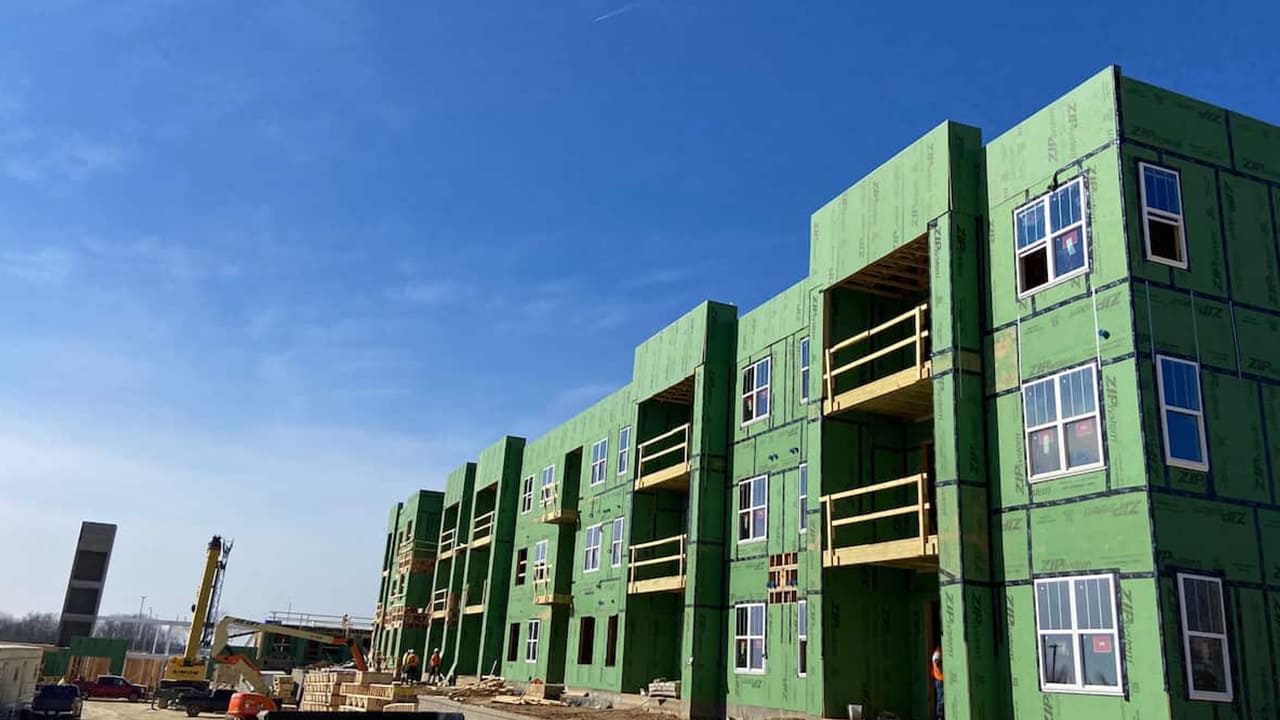
With rising occupancy, today’s market signals a high demand for new development. To better understand this and how developers can navigate today’s challenges without sacrificing long-term performance, we sat down with Laurie Schultz, principal and co-founder of Avenue. In this conversation, Laurie shares Avenue’s perspective on demographic demand, cost pressures, market selection, and why purpose-built, value-driven development is positioned to outperform legacy models in the years ahead.

Q: Many developers are waiting on the sidelines. Why do you see an opportunity right now?
Development is certainly challenging. That’s no secret. And in all honesty, it has been for the last five years. We’ve gone through tremendous hurdles with COVID and interest rate changes, labor cost increases, and inflation in materials, and everything that can be thrown at us.
But the one point that keeps coming back and we talk about is that it’s time for development, continues to be the demographic wave. And that should not, however, be the main focus of why you just start building. But it is a very important reason we should start development, because we do not have enough housing units in this country, especially for the boomer demographic and beyond.
But it has to be the right type of development. If we are continuing to build the senior living of yesterday, we’re going to continue to have weeks of challenges. Lease-ups continue to take longer. It’s more expensive in operating costs to operate these communities.
But if we build the right type of development that answers the demand of the boomer generation and beyond, that is what we should be focusing on, and that will see a level of success in the senior living housing industry on a financial investor basis that we have not seen for decades.
Q: How do rising costs and interest rates change how you develop?
Rising costs and interest rates change how you develop. Not whether you develop. Elevated costs are here to stay. This is not an economic situation that we saw during the Great Recession, where prices were declining in construction. And we just had to wait for the bottom to drop. We are living in a new playbook that has existed before, and how Avenue is answering the elevated cost in construction is really how we bring value to our residents who are paying rent, and how are we compensated for that value?
What are the items that will bring a higher price point in certain parts of our community, while still maintaining an attainable rent level for the majority? That we are doing that in several different ways. One, we are adding unit types that are elevated finishes, larger unit types, but a select few units that we would compare to, like a penthouse unit.
And we’re doing those at a handful of our communities to get to a higher premium on those units. We’re also looking at different types of partnerships that we’re bringing into our communities.
While active adult has been focused on a socialization and lifestyle approach, and that is incredibly important because socialization is one of the social determinants of health, and having that sense of community, we also want to bring extra value to our residents.
That is, traditionally, we’ve been our operating model for active adults, which has been on a health care platform. So, what other health care partnerships are important to the residents that they would like to see in their wellness journey? And how can we bring that in in different partnerships so that they don’t have to pay for outside of the community?
That might be an incremental value to the rent to increase our revenue, but in the value that it’s bringing to the residents, it’s something that they already have in the community, that they’re not going outside and paying for a completely separate cost.
Another thing that we’re exploring is partnerships on nutrition, whether that’s nutrition counseling or actually meal delivery, not in a traditional independent living setting where we’re building a commercial kitchen and feeding meals, but as truly making that part of a resident’s day-to-day lifestyle in their nutrition and wellness.
Q: What advantages does new development offer that older assets can’t easily replicate?
Avenue has been discussing acquisitions for several years. One of the reasons is that Viva Bene, while it is our new development, active adult brand. There’s an underlying operational model that we are looking at acquisitions and beyond, potentially also partnering with other organizations or providing this on an advisory basis on how to bring health care and other wellness-related partnerships into an unlicensed care environment in active adult or independent living.
One of the things that we keep coming back to in that exploratory journey is that Viva Bene is not only the underlying wellness programming model, but it’s also a beautiful building curated and designed for the boomers and the lifestyle that they want. And that’s really hard to replicate in acquisitions.
When you are starting from a blank slate, you can mold that clay into exactly what the residents want. That is what you are really targeting for this new generation coming into our age-restricted housing. You can get the exact finishes, the units, the ceiling heights, the large sunlight, the windows, the socialization spaces, the exterior amenities and programming, sports courts, and everything that today’s generation of boomers wants. We can build that from the ground up. And that’s one of the reasons we’ve been so successful.
Q: How is Avenue positioning projects today to be resilient long-term?
The success of development at its roots is in traditional real estate investment. Location, location, location is always important. And if you are in the right community setting, at the right visibility, you’re going to be successful to a point. So, traditional real estate fundamentals of investment are always important.
We also have to make sure that we truly understand that for a community and project to be successful financially, we understand our residents. That’s looking at demographics and now sociographics. It’s not just how old the average resident is. How much can they afford in rent? But it’s what is their lifestyle? What is their life like? Where do they like to eat? Where do they shop? How do they socialize with their friends? What are their extracurricular activities? What are their hobbies?
Understanding our residents to the heart and who is living in that community is a new way of looking at real estate investment that you’re really going to customize and experience for your resident, and hit a price point that is attainable for them and allows you to make a return on the investment yourself.
Q: What signals tell you a market is ready for new development despite uncertainty?
Avenue loves to go into untapped markets. And while so much investment activity happens on the coast or in tier one and tier two cities, Avenue’s success over the last 11 years has really been finding those markets that have high demand and not a lot of competition. And we’re really focused on that for the future. Our Viva Bene community in Saint Louis is the first active adult community in the metro area on the Missouri side, and there are many markets in the country like this that do not have active adults.
So how do we even know that that would be successful, other than it’s just the first? We look at surrounding communities and what is going to be competitive for us that traditionally may not be competitive in this asset class. We, too, are independent living communities. We see who the residents are in there, and are there younger residents that we could target in an ideal community that is living there?
Maybe not by a choice that they knew, but because there were no other options in the market. We also tour and secret shop multifamily communities and look for the same. Many multifamily communities are naturally occurring retirement communities. If you get the right area and you tour a multifamily community, you can really get a sense, hey, there is a population here, boomers, that is living here again, not because they want to live with the 25 year old next door blasting their music, or the children running up and down the halls, but because there’s no other option in the market. And so they refer their friends, they say, hey, I’m living here, and it creates this naturally occurring retirement community. We want to look for those markets that have unmet demand to expand Viva Bene and create a sense of community with their peers.
Conclusion
Despite economic uncertainty and elevated development costs, the fundamentals supporting new senior living development have rarely been stronger. As Laurie Schultz makes clear, the opportunity is not about timing the market; it is about responding to a demographic reality with a fundamentally different approach. Purpose-built communities that align with how today’s boomers live, socialize, and invest in their health are better positioned to achieve both resident satisfaction and long-term financial performance.
New development offers what legacy assets often cannot: the ability to design intentionally for lifestyle, wellness, and value from the ground up. By combining disciplined market selection with a deep understanding of resident sociographics, Avenue is demonstrating that thoughtful, value-driven development can meet pent-up demand in underserved markets while remaining resilient through economic cycles.
For developers willing to move forward with clarity and conviction, now is not a moment to wait; it is a moment to build differently. Contact us today to learn more.